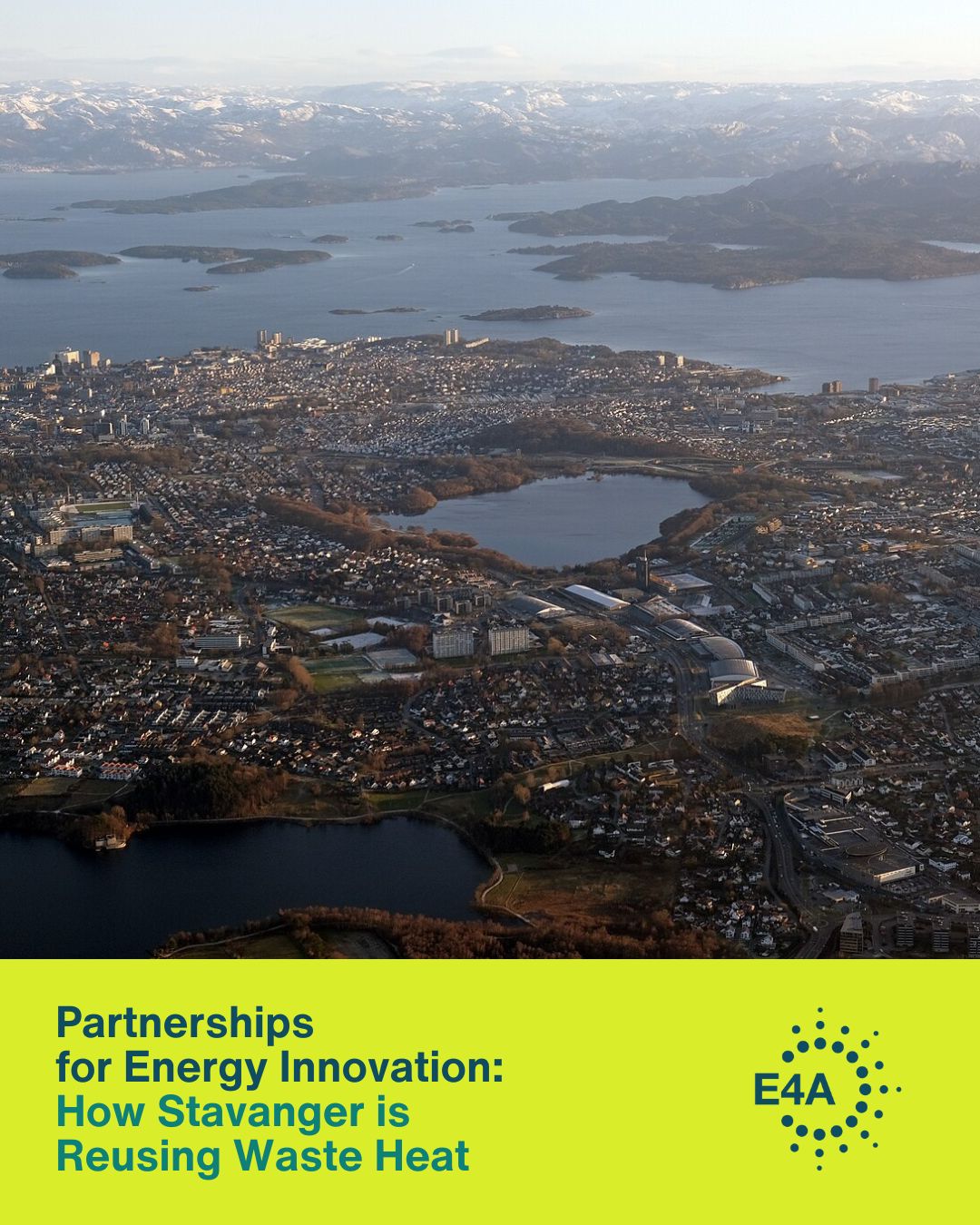
In the push for climate neutrality, the city of Stavanger—long known as Norway’s “oil capital”—is attempting a radical pivot. Central to this shift is the planned Positive Energy District (PED) in the Hillevåg neighbourhood, an ambitious project intended to produce surplus renewable energy while transforming the district into a greener, more people-centred urban environment. But what happens to existing businesses, local heritage, and lower-income residents when such large-scale green transformations take place?
In the article “Between progress and preservation: the socio-economic challenges of positive energy district in Stavanger, Norway,” published in ScienceDirect, author Yonas Tesema examines how different local actors—from business owners and historians to planners and civil society representatives—perceive the Hillevåg PED. The paper asks what socio-economic uncertainties cities must address when planning energy transitions and argues that climate-driven urban transformation must balance ambitious sustainability goals with the preservation of local economies, histories, and communities.
1. Mobility, Planning, and Local Commerce
One of the most concrete findings in the article concerns the relationship between mobility planning and local commerce. To achieve the energy efficiency required for a PED, plans for Hillevåg prioritise pedestrians and cyclists, introduce green public spaces, and restrict car mobility.
For local business owners, however, these changes are not experienced simply as environmental improvements. Many small businesses depend on customers arriving by car, and the reconfiguration of mobility patterns raises concerns about economic viability. Tesema shows that if the transition toward an “energy capital” overlooks the micro-economics of local storefronts, it risks producing economic exclusion. Business owners report that while they are invited to meetings and consultations, they feel that planning processes often proceed regardless of their concerns, challenging their ability to remain competitive.
2. Progress and Preservation in the Urban Landscape
The article further explores conflict surrounding the physical and cultural transformation of the district. On one side are planners and political actors who emphasise densification as a means of improving energy efficiency. This approach involves constructing new, energy-efficient housing developments, sometimes described by interviewees as “fancy apartments” or penthouses.
On the other side are heritage actors and local stakeholders who argue that rapid ecological modernisation risks erasing Stavanger’s cultural and historical identity. Historical buildings are described as “historical treasures” that struggle to compete with large-scale redevelopment. Tesema frames this not as a simple opposition between sustainability and tradition, but as a challenge of reconciling progressive energy transition planning with the preservation of the city’s social and historical fabric.
3. Participation and the “Production of Invisibility”
A central analytical contribution of the study is the concept of the “production of invisibility.” Tesema uses this term to describe how certain interests, such as those of local traders or lower-income residents, may remain less visible within planning scenarios, even when engagement processes formally exist. The analysis suggests that this can occur when particular groups experience limited opportunities to shape decision making processes.
Based on interviews conducted as part of the research, some participants reflected on the nature of existing engagement practices. While municipal authorities have invested in informing residents and stakeholders, the study notes that several interviewees raised questions about the extent to which these processes enable meaningful influence. As one property owner interviewed in the study observes, “The administration has been great in informing… but the main question is, have they been listening enough?” According to the study, when participation is experienced primarily as communication rather than co-creation, some stakeholders may feel more like observers than active partners in the transition. In this context, Tesema highlights how questions of visibility and inclusion can become relevant considerations in the governance of urban energy transitions.
4. Densification and Social Inequality
Densification is presented as an important component of the Hillevåg PED, as a more compact urban form can support more efficient energy use and urban services. At the same time, Tesema’s study draws attention to concerns expressed by some civil society organisations that this development model may disproportionately benefit higher-income groups. According to the analysis, certain stakeholders fear that an emphasis on higher end housing could make it more difficult for lower income families to remain in the area, raising broader questions about how the benefits of the transition are distributed. The study therefore reflects on the importance of careful policy design to ensure that climate related urban innovations support both environmental goals and social sustainability, avoiding situations in which the transition might unintentionally produce unequal outcomes among residents.
5. Reflecting on a Human-Centric Transition
The study concludes that for a PED to be truly “positive,” it must integrate bottom-up community perspectives alongside technical and economic objectives. A just energy transition is not defined solely by carbon reductions or renewable energy surpluses, but by how change is experienced at the local level. This includes balancing history and modernity, supporting small businesses affected by mobility reforms, and fostering engagement that empowers residents through participatory planning rather than only informing them.
As it is argued, accelerating the energy transition requires addressing societal challenges at the grassroots level. If attention remains focused primarily on techno-economic performance, PED policies risk becoming socially exclusive and less effective in practice.
Lessons for Human Centred Energy Transitions
The analysis presented in this study offers an important perspective on the complexity of implementing PED in existing urban environments. While PED initiatives are often framed through technological innovation and environmental performance, the case of Hillevåg illustrates how deeply these transformations are embedded in social, economic, and cultural contexts. Urban energy transitions do not unfold in empty spaces, but within neighbourhoods shaped by long standing economic activities, social relations, and historical identities.
Read the full article: https://www.sciencedirect.com/science/article/pii/S2211467X26000337



Share on