By Siddharth Sareen | For University of Stavanger via Fridtjof Nansen Institute
The Norwegian partners of ENERGY4ALL convened on Friday 17 October 2025 at a full-day seminar coordinated by the University of Stavanger and hosted by heavy industrial partner
Felleskjøpet. The highlight of this seminar marked perhaps
the most important concrete achievement related to the ENERGY4ALL project to date, relating to the
PED Hillevåg initiative in Stavanger Municipality in Norway. This was namely
the commissioning of a carbon neutral biomass plant as an energy source for the heavy industrial process of manufacturing cattle and poultry feed at Felleskjøpet’s flagship factory in Hillevåg.
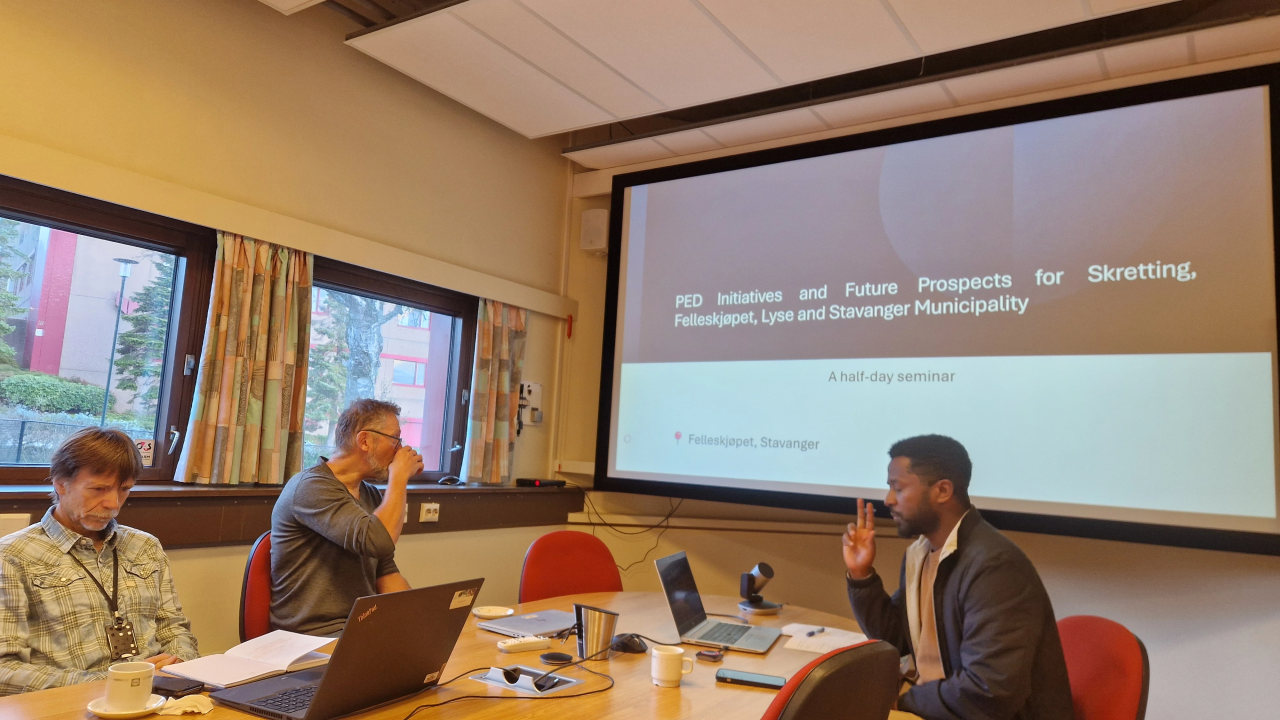
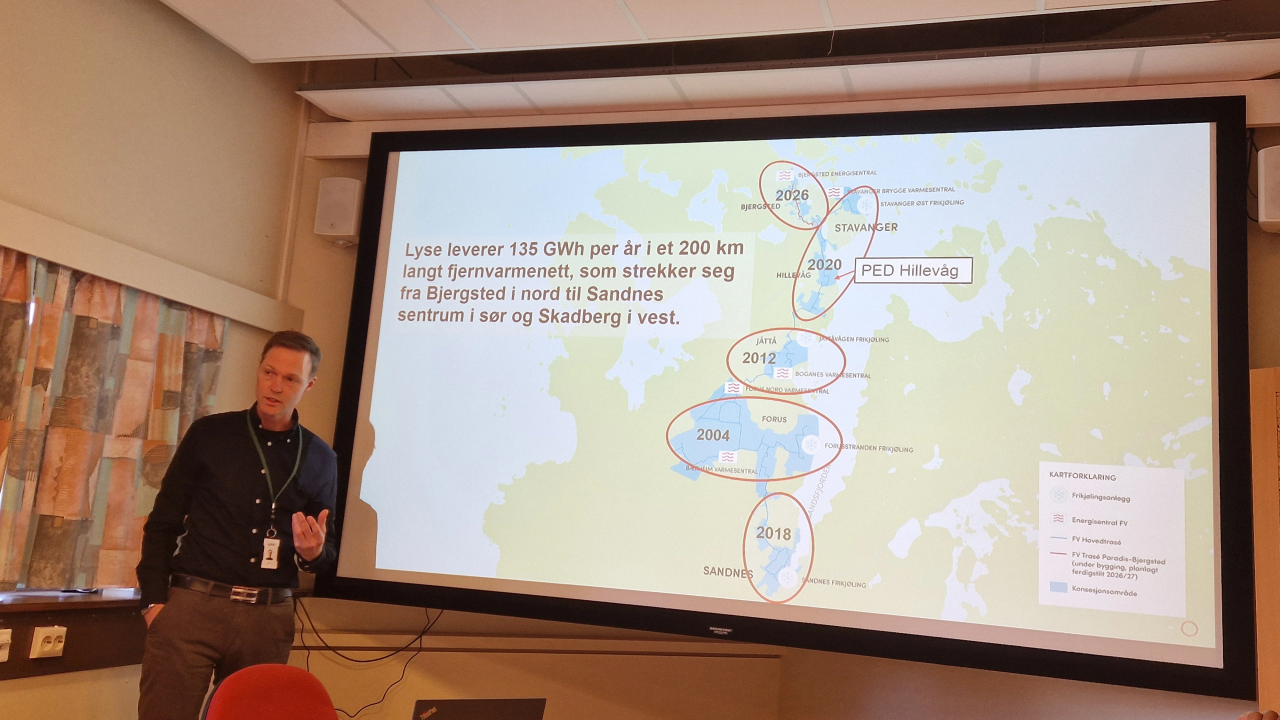
The partners were treated to a keynote by Anders Riel Müller, who presented reflections on developments related to PEDs in Stavanger, with some concrete examples, raising questions of the importance of strategic leadership and coordination. Each of the partners – Felleskjøpet,
Skretting,
Stavanger Municipality, and
University of Stavanger – presented updates and discussed project activities and accomplishments.
Some key issues discussed related to how carbon emissions in the Hillevåg neighbourhood of Stavanger are primarily associated with the
heavy industry operations of Felleskjøpet and Skretting, which have been primarily based on steam produced using gas. Representatives from energy company delivering sustainable energy solutions
Lyse Neo (related to gas infrastructure and operations), as well as from
Lnett (related to electricity infrastructure), were also present and contributed to an informed discussion.
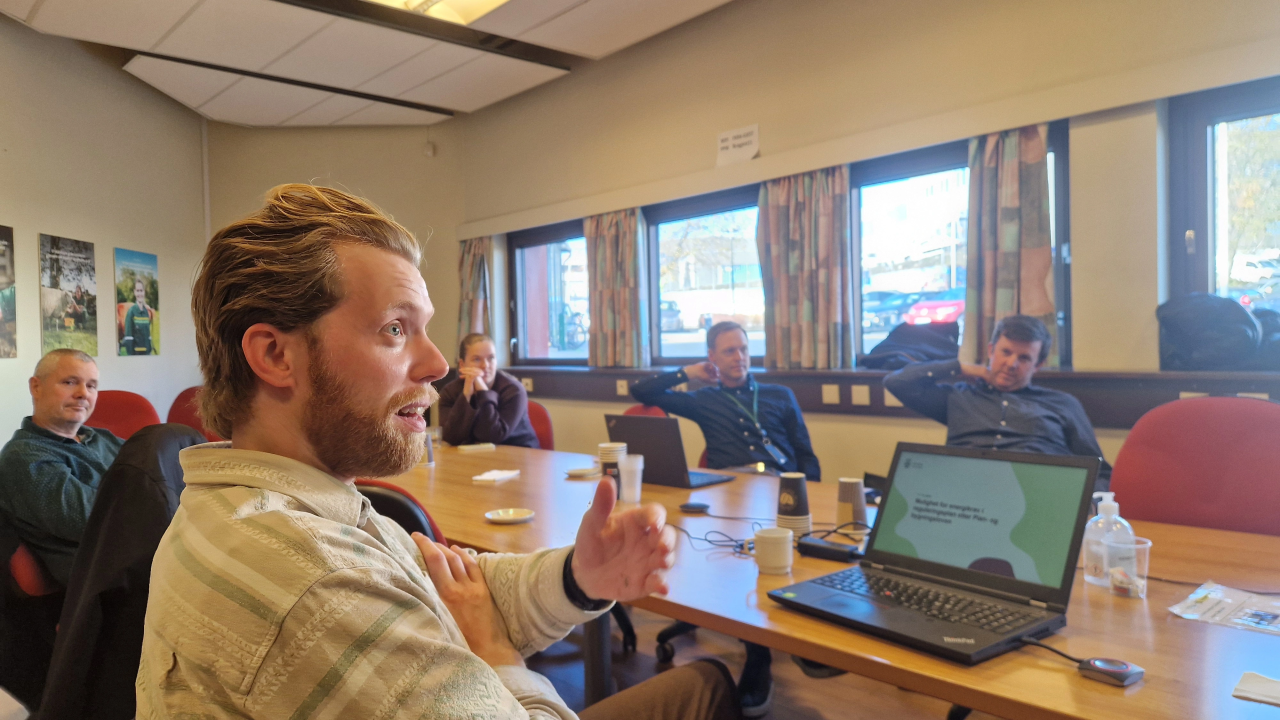
Stavanger Municipality presented concerns of both a projected increase in households and related energy demand in Hillevåg, and of the need to coordinate across spatial planning and energy across silos. University of Stavanger reported updates related to knowledge production based on interviews and analysis, as well as in relation to the wider PED initiatives as part of ENERGY4ALL.
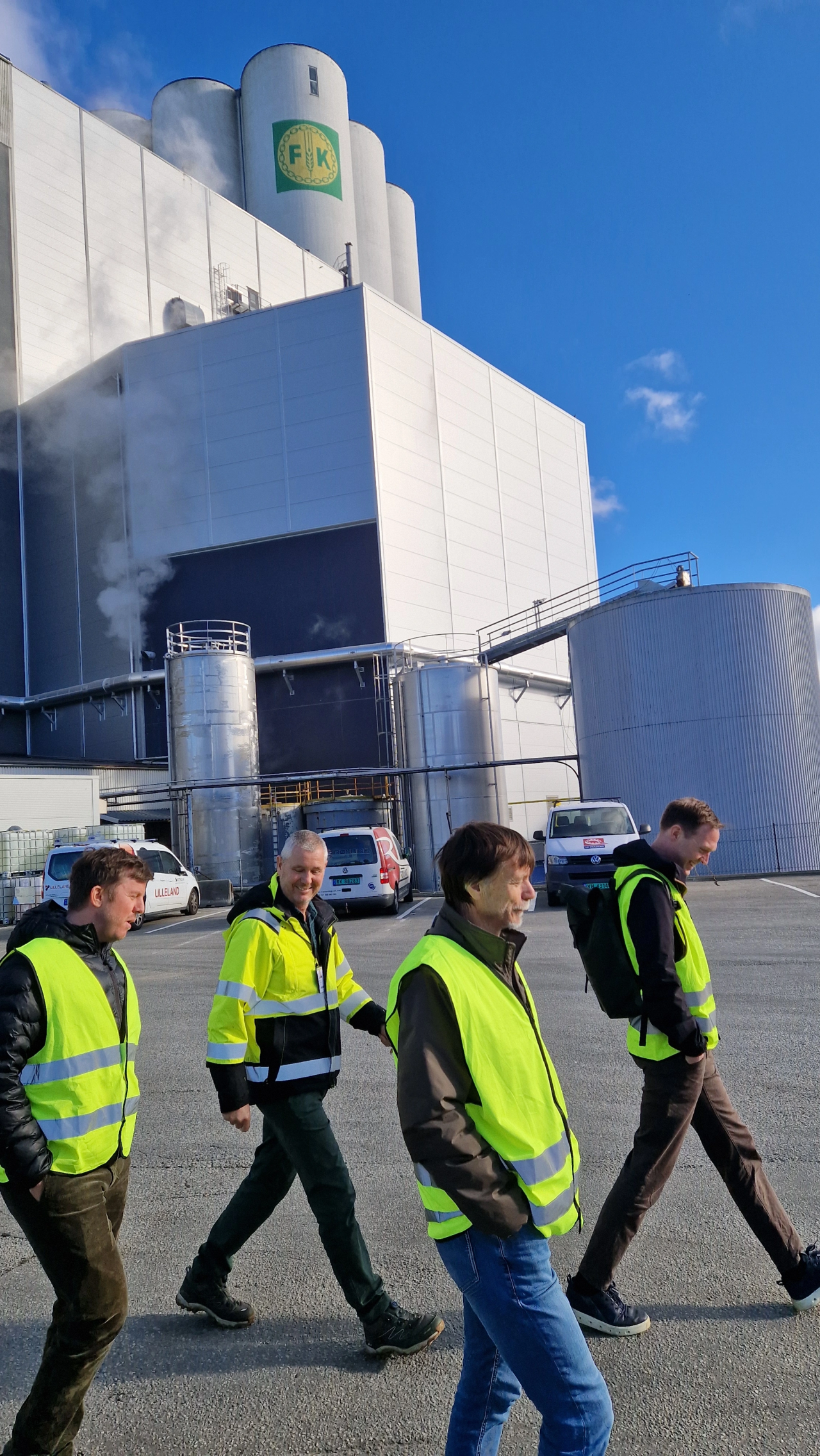
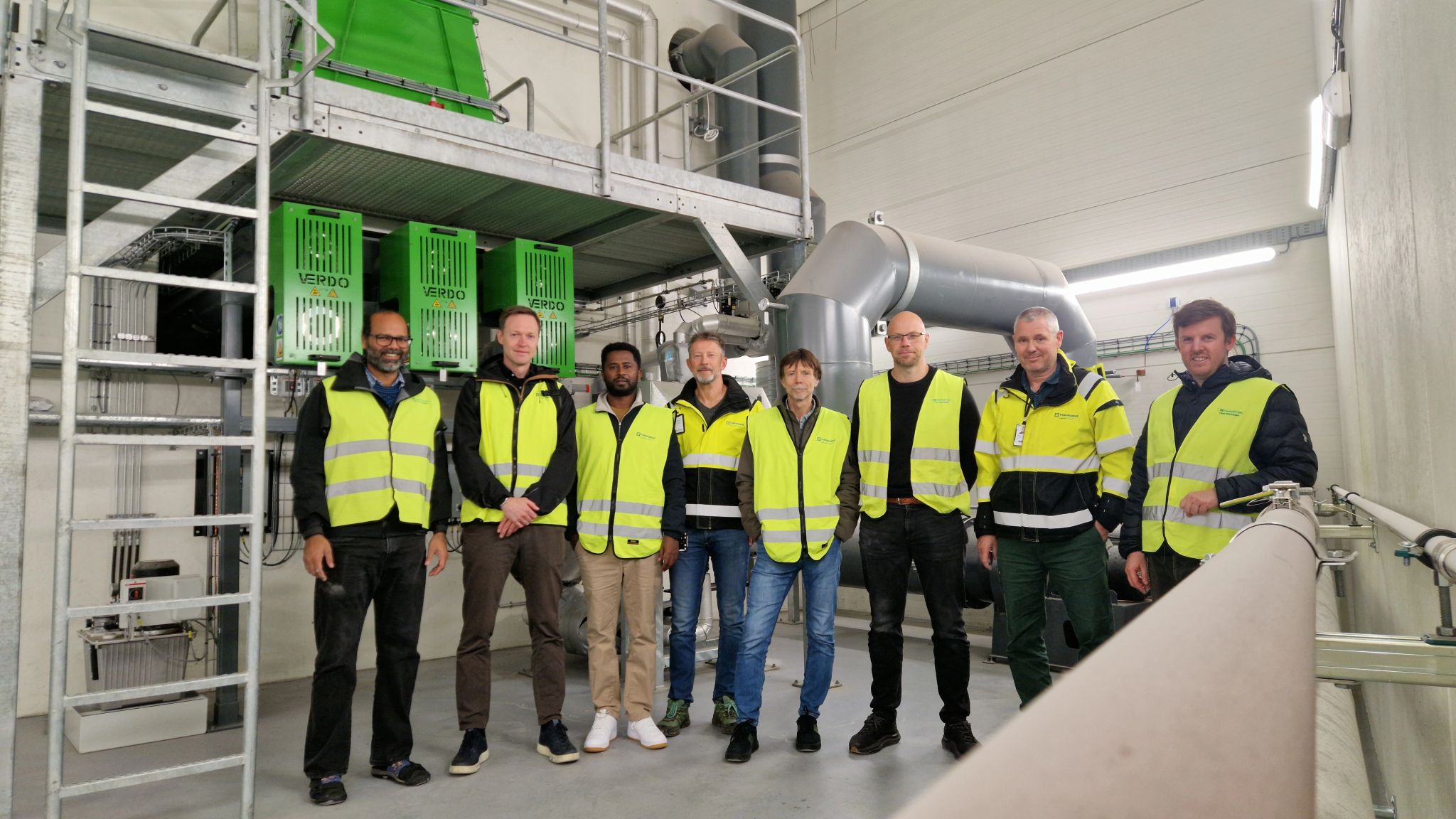
The most exciting part of the day was when Felleskjøpet colleagues took the consortium members on a guided tour of the massive new biomass plant to explain operational details. This 6 MWp facility was built with an investment of more than
€10 million by Felleskjøpet including support from
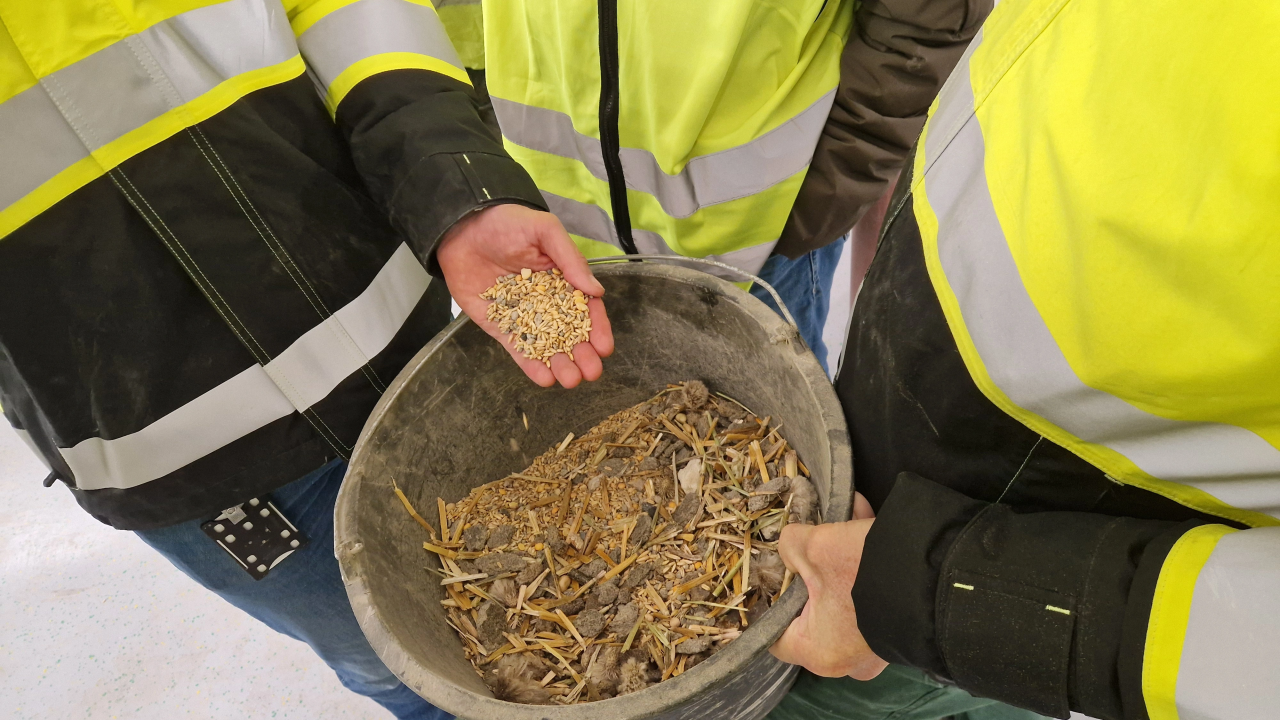
Enova to enhance energy efficiency and accelerate decarbonisation efforts. It is powered by oat hulls, which are a byproduct that Felleskjøpet’s farmer members are able to provide. The oat hulls go through an elaborate process before being combusted to produce steam that is then used to manufacture cattle and poultry feed, displacing gas that had hitherto been used in the process.
From May 2025 onwards, this has led to a drastic reduction in carbon emissions from the Felleskjøpet factory, approximately to the tune of 90%.
Skretting colleagues were interested in the potential to synergise their future plans and investments in light of this successful development, for instance by making use of some of the capacity from this biomass plant, although they do not have oat hulls as a natural part of their own supply chain, which relates to manufacturing fish feed.
Lyse Neo pointed out the next stage of the process as utilising the waste steam generated at Felleskjøpet, which is now carbon neutral, in order to feed it into biomass energy supply beyond the factory operations. This would turn a wasted resource into a revenue stream for Felleskjøpet while enabling carbon neutral energy supply capacity for Lyse Neo. On a different note, Skretting did share a wealth of energy efficiency measures undertaken at their factory to achieve several impressive benchmarks, reducing their operational carbon emissions in this manner.
Of the ENERGY4ALL pilot projects, PED Hillevåg is the one that deals primarily with industrial emissions and public-private cross-sectoral cooperation, as well as with heat as a vector rather than solely electricity. The meeting on 17 October 2025 showed how our project has been instrumental in helping bring about larger infrastructural advances for decarbonisation, as participants attested to, notably in the case of the cooperation achieved between Felleskjøpet and Lyse Neo after many years of efforts.
ENERGY4ALL activities have further contributed to Skretting gaining a better sense of the viability of similar future options through an improved basis for assessment. Large corporate investment decisions involve assessment of risk and trust within and between large complex organisations, in addition to the technical complexity of understanding demand and supply patterns relative to seasonal variations related to the hybridisation of energy source mixes. This has been a valuable focus of learning and advancing knowledge for University of Stavanger in the project.
Stavanger Municipality’s point that coordination across spatial planning and energy planning was a reminder of the difficult nature of organisation coordination on socio-technical transitions. The municipality has made participatory measures available to Hillevåg residents in its local planning and budgeting, yet energy related decisions remain large and technical and not within the sphere or everyday consciousness of citizens to mobilise around through local organising.
Rather, the key stakeholders who determine these developments in Hillevåg have tended to be industrial ones, and our efforts in ENERGY4ALL have further clarified the importance of cooperation across the public and private sector. A crucial investment decision by Felleskjøpet aided by national support through Enova and technical cooperation on energy infrastructure has shown the value it is possible to achieve by rapidly decarbonising in tune with sound business sense. Indeed, Felleskjøpet confirmed that they were very pleased with the economic outcome of the biomass plant.
It is said that “nothing succeeds like success”, and while the socio-technical puzzle differs from case to case, the nature of maturing technical renewable energy development implies wider scope to accelerate such solutions in the future. This is one of the key successes of PED Hillevåg, coming from a large complex decision related to a point source of high emissions in the neighbourhood rather than from bottom-up organising or from the municipality’s highly delayed decision related to developing a swimming pool in its proximity. University of Stavanger’s efforts to interview a wide slew of stakeholders and to run analysis in this regard have shown no groundswell of popular mobilisation related to energy, but rather a clear set of synergies being identified and gradually exploited by well-positioned industrial actors. Enabling more such constellations and widening scope for desirable synergies can be an important part of Stavanger Municipality’s strategy to realise its ambitions as a Mission City, for which the achievement at Felleskjøpet is a heartening one!
Photos by Siddharth Sareen.



Share on